The stain on the ceiling showed up after the last storm. Or the roofer who came out in December told you the shingles are done. Either way, it’s winter, and you’ve probably heard that roof work has to wait until spring.
So, can you replace a roof in winter? You can, and in some cases you shouldn’t wait. By the end of this post, you’ll know whether your roof needs replacing now, can be repaired to get you through to spring, or just needs protection until the weather breaks. You’ll also know exactly what a cold-weather install does differently.
Here’s the part most people don’t expect. The cold isn’t the real risk. The bigger worry is wind getting under new shingles before they’ve had a chance to stick down.
Can You Replace a Roof in Winter? Yes, and Sometimes You Shouldn’t Wait
If your roof is leaking into the house, has soft or damaged decking, or lost shingles in a storm, replacing it in winter beats waiting, because snowmelt and freeze-thaw keep pushing water in. If it’s old but still dry, a targeted repair can usually carry it to spring. Cold changes how shingles seal, not whether the job gets done.
The “wait until spring” idea comes from a real issue. Asphalt shingles have a strip of adhesive on the back that bonds each shingle to the one below it, and that adhesive needs warmth to activate. In cold weather, it doesn’t activate on its own right away.
Shingle manufacturers know this and publish cold-weather installation instructions to cover it. GAF, for example, sets no practical lower temperature limit for installing its shingles, as long as the right precautions are taken. So the real question isn’t whether a roof can go on in January. It’s whether your roof’s condition makes waiting more expensive than doing the job now.
Replace Now, Repair Until Spring, or Protect It: Which One Fits Your Roof?
Most winter roof problems fall into one of three situations. Figuring out which one you’re in tells you whether to act now or plan for spring.
Replace Now: Active Leaks, Soft Decking, or Storm Damage
A winter replacement makes sense when:
- Water is already coming into the attic or living space
- The roof deck feels soft or spongy, or you can see it sagging
- A storm stripped whole sections of shingles, not just one or two
In these cases, every snowmelt and freeze-thaw cycle pushes more water into the decking, insulation, and drywall. Waiting until spring usually means paying for that damage on top of the roof. If water is coming in right now, our emergency roofing crews can stop it first, so the replacement gets planned instead of rushed.
Repair Now, Replace in Spring: An Old Roof That’s Still Dry
A repair can carry an aging roof to spring when:
- The roof is near the end of its life but isn’t leaking
- Damage is limited to a few shingles, a flashing seam, or one area
- The decking underneath is still solid
Here, a targeted roof repair buys time without squeezing a full tear-off into short, cold days. You plan the replacement for spring with less pressure. If you’re not sure whether to repair or replace, the answer usually comes down to the roof’s age, how widespread the damage is, and the condition of the decking.
Protect It Until a Dry Window: Damage That Can’t Wait but Can’t Be Fixed Today
Sometimes roof damage needs attention now, but the weather won’t allow a proper repair:
- Sleet, freezing rain, or frost is on the roof
- A storm is still moving through
- Ice is covering the area that needs work
Temporary protection, like a properly secured tarp, keeps water out until there’s a dry, workable window. The permanent fix happens then. A good roofer will tell you when today isn’t the day, instead of installing materials on a wet or frosted surface.
What Changes When You Install a Roof in Cold Weather?
Roofing in cold weather works, but the method changes. Here’s what’s different:
- Seal strips don’t activate on their own. The adhesive on asphalt shingles needs warmth and sun. In the cold, installers hand-seal shingles with roofing cement instead.
- Shingles get stiff. Cold asphalt is less flexible, so bundles have to be handled carefully to avoid cracking. Some manufacturers recommend storing shingles somewhere heated before they go up.
- Frost and moisture block adhesion. Self-adhering underlayment and sealants don’t bond well to a damp or frosted deck, so work waits for a dry surface.
- Days are shorter. Fewer daylight hours means less roof gets done each day, so projects take longer.
- Snow and ice come off first. The roof has to be cleared before any tear-off starts.
None of these make a winter roof a worse roof. They make the job slower and more careful, and that’s the trade.
Do Shingles Seal in Cold Weather?
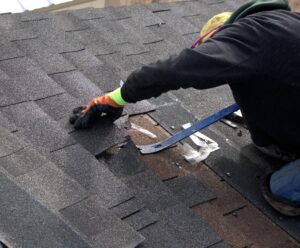
Not right away, and not on their own. Asphalt shingles rely on warmth and direct sun to activate the seal strip, so shingles installed in cold weather may not bond until temperatures climb. That’s why manufacturers including GAF and Owens Corning include hand-sealing in their cold-weather guidance: dabs of approved roofing cement under each shingle, pressed down to hold it in place.
When installing shingles in cold weather, hand-sealing is the step that matters most. Skipping it leaves new shingles lying loose on the roof until warmer weather finally bonds them.
Why Unsealed Shingles Are a Bigger Risk on a Windy, Coastal Roof
Unsealed shingles are a bigger risk on a windy, coastal roof because wind is what lifts them. Inland, a shingle that hasn’t sealed yet might sit undisturbed until a warm spell bonds it. Near the water, winter storms bring strong, steady wind that can get under that loose edge, lift it, and tear it off before it ever seals.
The roofing industry treats hand-sealing as protection against exactly that. The Asphalt Roofing Manufacturers Association notes that hand-sealing improves resistance to wind blow-off in very cold weather. On a home that takes nor’easters straight off the ocean, hand-sealing the shingles, especially along the roof edges where wind grabs first, is part of doing a winter roof right.
What Does a Winter Roof Replacement Involve?
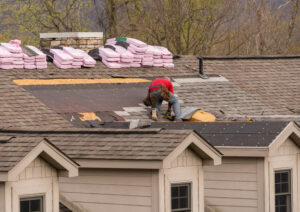
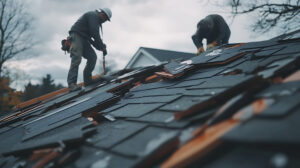
A winter roof replacement follows the same basic steps as a summer job, with extra precautions built in. Here’s what to expect from a careful crew:
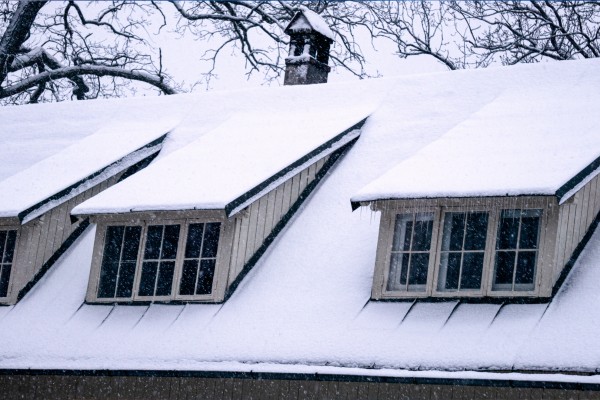
- Clearing the roof. Snow and ice come off before tear-off begins.
- Tearing off only what can be closed that day. The old roof comes off in sections, so the home isn’t left open overnight.
- Protecting the eaves. Ice-and-water protection goes down along the roof edges, where ice dams form and meltwater backs up.
- Installing and hand-sealing shingles. Shingles go on with cold-weather precautions, including hand-sealing.
- Pausing for weather. Sleet, freezing rain, or high wind stops work until conditions clear.
Expect the timeline to run longer than the same new roof installation would in June. The extra days are what keep a winter roof sound.
How Do You Check a Roof’s Condition When It’s Covered in Snow and Ice?
With a drone. Walking an icy roof is risky, and snow hides most of what you’d want to see from a ladder. A drone inspection gets close-up views of shingles, flashing, and roof edges without anyone stepping onto a slick surface or cracking cold, brittle shingles underfoot.
At Olympic Roofing, our free roof inspections can be done by hand or by drone, so you can see what shape your roof is in without waiting for a thaw. Inside the house, ceiling stains, damp attic insulation, and daylight through the roof boards are the warning signs that mean your roof has reached the end of its life, and they’re worth acting on in any season.
Winter Roof Replacement Questions Homeowners Ask
How Cold Is Too Cold to Install a Roof?
There’s no single cutoff temperature, as long as the installer follows the shingle manufacturer’s cold-weather instructions. GAF, for example, sets no practical lower limit for its shingles when precautions are taken, though it notes shingles are easiest to handle above 40°F. Below that, crews rely on warm storage, careful handling, and hand-sealing. Frost, ice, or moisture on the roof deck matters just as much as the temperature.
Is It Cheaper to Replace a Roof in Winter?
Sometimes. Winter is a slower season for many roofers, which can mean more flexible scheduling and, with some contractors, better pricing. That saving isn’t guaranteed, and cold-weather work can take longer. The bigger savings usually come from not waiting, since replacing a leaking roof before spring prevents water damage to decking, insulation, and ceilings.
Should I Wait Until Spring to Replace My Roof?
Only if your roof is still keeping water out. An older roof that’s dry and structurally solid can usually be repaired now and replaced in spring. A roof that’s leaking, sagging, or missing sections after a storm should be replaced in winter, because snowmelt and freeze-thaw cycles will keep pushing water into the home until it is.
Not Sure Your Roof Will Make It to Spring? Start With a Free Inspection
The hardest part of a winter roof problem is not knowing which situation you’re in. A free inspection settles that. Olympic Roofing has spent more than 50 years working through New England winters, and our own crews will tell you plainly whether your roof needs replacing now, a repair to get you to spring, or nothing at all yet.
Call 800-535-4312 or request your free roof inspection before the next storm makes the decision for you.